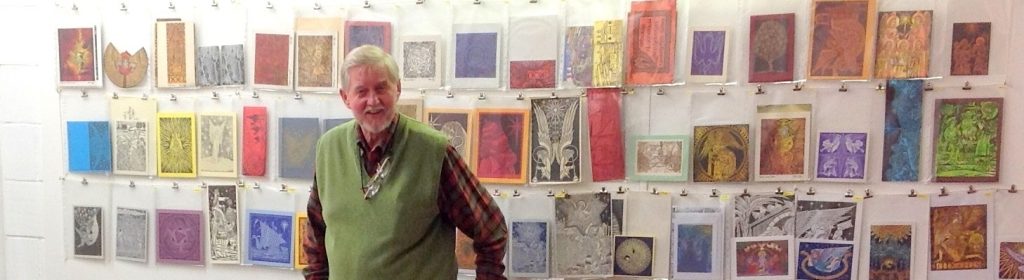
Alan Figg was born just two years before the start of World War II. His earliest memories were of life in Cwmdonkin Terrace, Uplands. His family had moved there from St Thomas, the docks area of Swansea, to escape the Blitz in 1941.
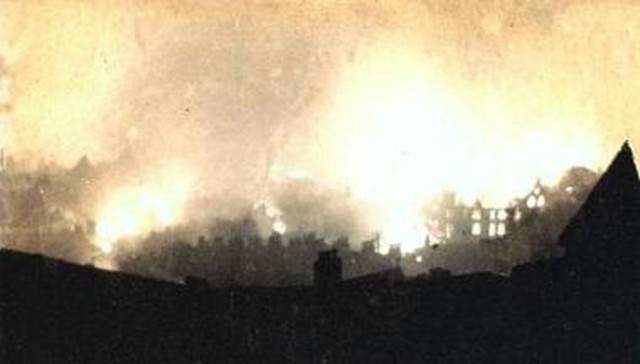
He clearly recalled the sight of Swansea ablaze as his mother hurried him and his little sisters into next-door’s house where they sheltered on a mattress under the Morrison table. Alan, aged just 3 and a half, was given the task of carrying the pillows. He loitered on the way, mesmerised by what, to him, looked like some grand firework display. It was an image that stayed with him all his life.
Alan drawing from outside the home of Dylan Thomas with Cwmdonkin Terrace, where he lived as a boy, in the background.
He chose Dylan’s poem, the ‘The Hunchback in the Park’ to illustrate for our Dylan Thomas Dialogues Box Set in 2015.
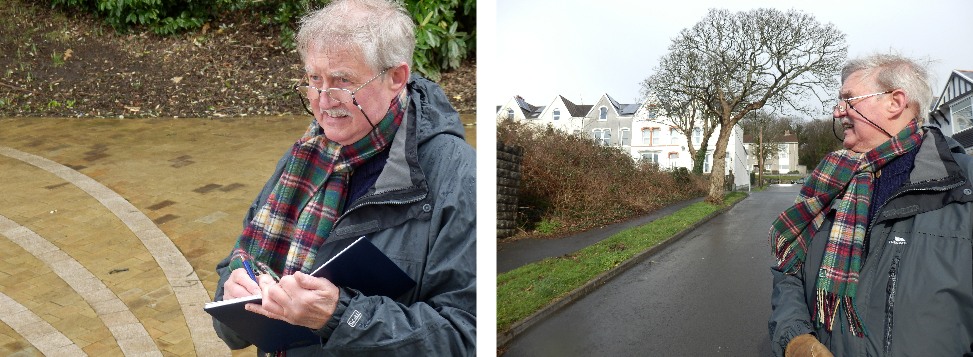
Cwmdonkin Park was his playground for his first ten years and where, like Dylan Thomas before him, he ran ‘his heedless ways’. It was an idyllic childhood, his experiences mirrored eloquently in the poem ‘Fernhill’ A recording was played at Alan’s funeral, read by the poet in his unmistakeable mellifluous tones.
In the year that Alan turned 11, he moved with his family to a brand new council estate in Penlan, built to house people after the blitz, when much of Swansea had been bombed. It coincided with a change of schools, from Terrace Road primary to Bishop Gore Grammar School for Boys. He was the only one of his friends at the time who passed the ‘Scholarship’ examination (The Eleven Plus) but he found it difficult to fit in and would often ‘mitch’ with other boys – off down Gower, climbing cliffs and looking for birds’ nests.
These early memories proved to be fruitful, finding visual form in the prints he was to make in later years.
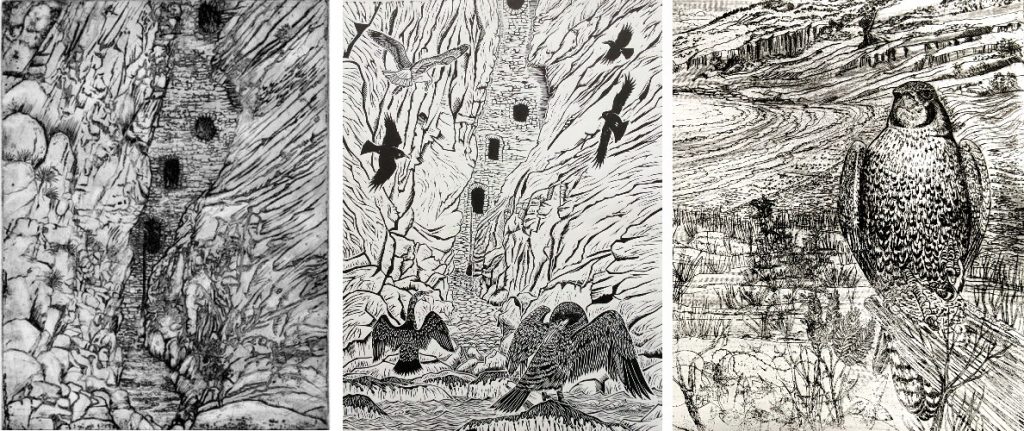
When it came time for Alan to do his O-levels, he took fright and ran away to work on a dairy farm near Carmel in Carmarthenshire. Here he was introduced to the hard work of the farm – looking after the cows, getting up early in the morning, often in bad weather, mucking out and helping with the milking. On the plus side, he got to drive the tractor and would think about his peers back in their stuffy classroom. He had no regrets. Unfortunately, after a few months, he was taken ill with a very bad dose of tonsilitis and was sent home to get better. This coincided with the return from sea of his father, a merchant seaman. He hit the roof when he heard that Alan had been allowed to leave school before his exams and forbade him to go back to the farm. Instead, he was found a job in a prestigious gents’ outfitters in town. Alan threw himself into the work of selling and was very successful at it, charming customers into making purchases.
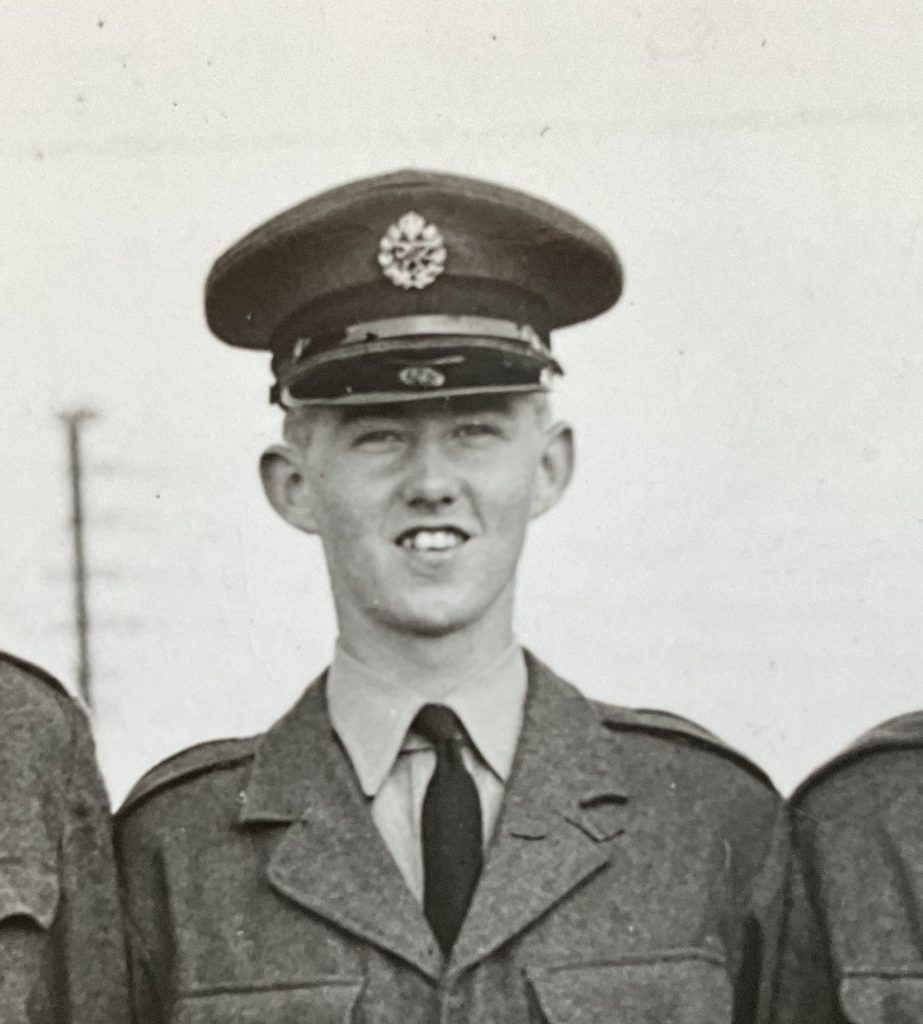
Soon the prospect of National Service loomed and Alan left the gents’ outfitters to work as a labourer on the new Steel Works in Felindre. In the few months he was there, he did as much overtime as he could and also earned danger money so that he amassed a considerable pot to take him into the RAF. However, he managed to lose it all very quickly in the first few weeks playing poker. It taught him a salutary lesson in life and he determined never to bet again.
Gill relates that when it came to fitting Alan out with uniform – he had a rather small head , so that when he turned his head, his cap had a tendency not to turn with him!
He said that National Service gave him a sense of purpose and he signed on for an extra year to complete his education and gain some qualifications.
However, when he came back out onto Civvy Street, Alan found himself unemployed for a brief period and, for the first and only time in his life, he felt depressed. He had decided while in the Air Force, and encouraged by his peers, to apply for a teacher training course, but it was the wrong time of year and all the courses were filled. Eventually, he found a job as an advertising salesman with the Western Mail. Here again, he threw himself into the work with his customary enthusiasm, while at the same time applying to various colleges. The following autumn found him in his first year as a student in Swansea College of Art. He chose to study stained glass as his main subject and lithography as an additional subject in what was then the National Diploma in Design. This was to have another significant impact on his life. He became particularly close to a brilliant student in the stained glass department, Tim Lewis, who was an inspiration. They became lifelong friends.
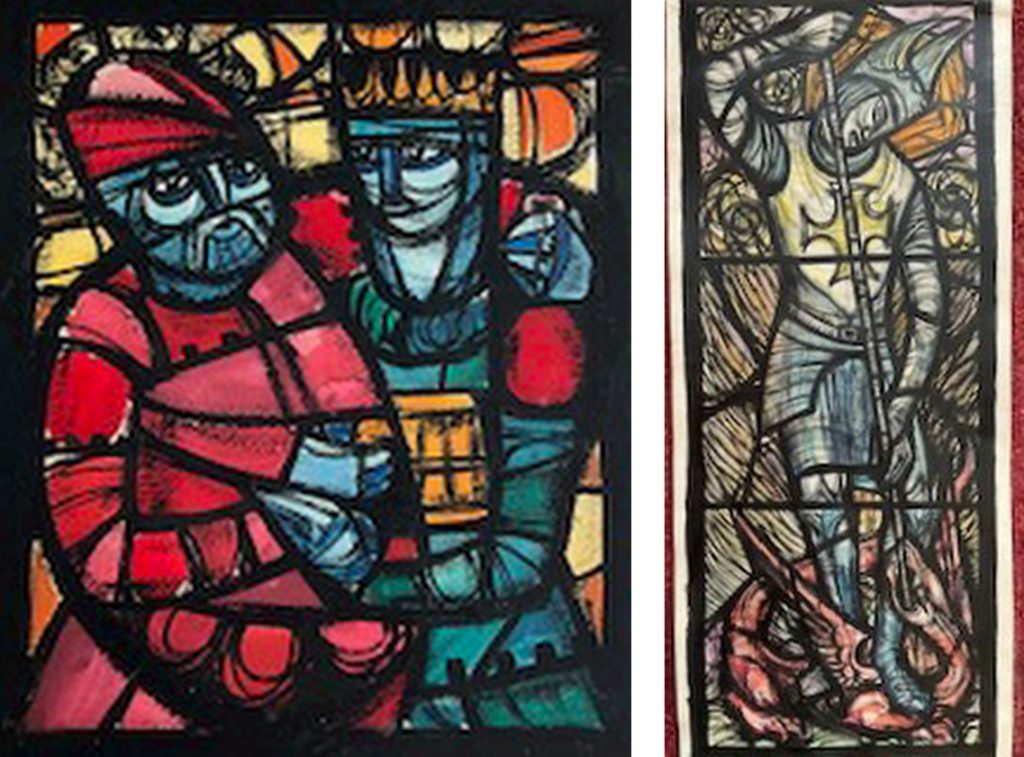
National Diploma of Design, 1962
Designs for stained glass project
Shakespeare – Falstaff and Henry V
St George and the Dragon
The stained glass department at Swansea College of Art was renowned world-wide, under the benign leadership of Howard Martin. He was a natural teacher and knew how to draw out the best from his students. He was also a very kind man and would often give students the price of a ticket to watch Swansea City play at the Vetch Field, or send out for ice-creams on a hot day. He was ably assisted by Marjorie Walters, who brought her practical experience of working at the famous Whitefriars stained glass studios in London. She taught cartooning (i.e., drawing up designs to full size) as well as Heraldry.
In addition to stained glass, Alan also studied lithography under the tutelage of Andy Charlton, and fell in love with the subject, producing a considerable amount of work. This is very different from his later work as it involved layering fine colourful textural work. These large slabs of limestone could only be accessed and worked on in college conditions and required considerable expertise. Almost impossible to carry on working in the same way once you had left college.
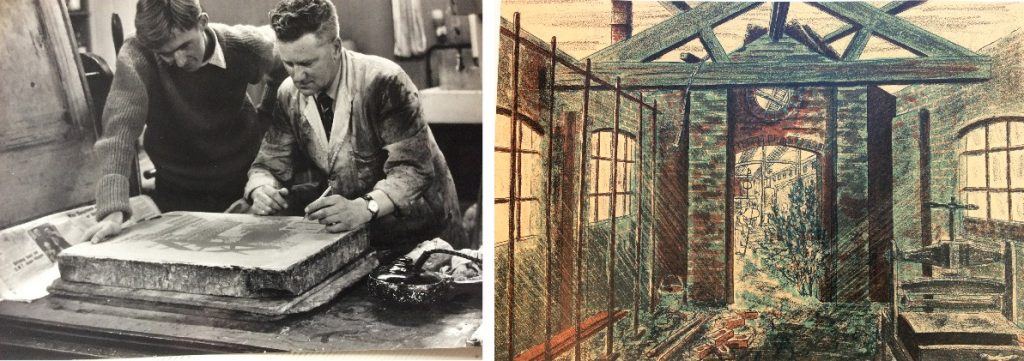
Alan working with Ron Knight on the lithographic stone for this print of Derelict Steelworks, Cwmfelin, Swansea.
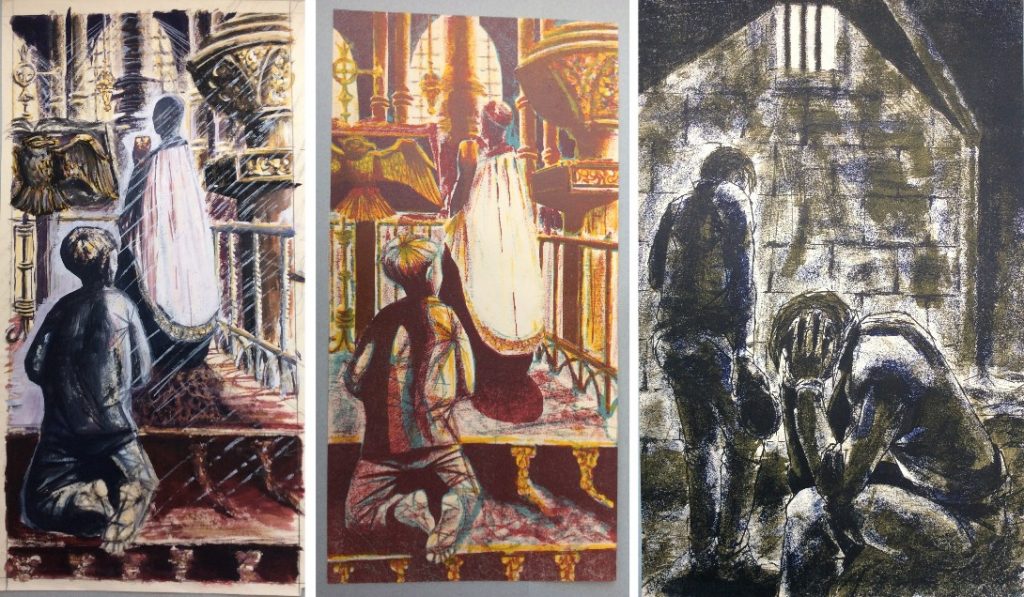
Design for ‘First Communion‘ and lithograph 400 x 200cms. ‘Locked Up‘ lithograph 310 x 440cms
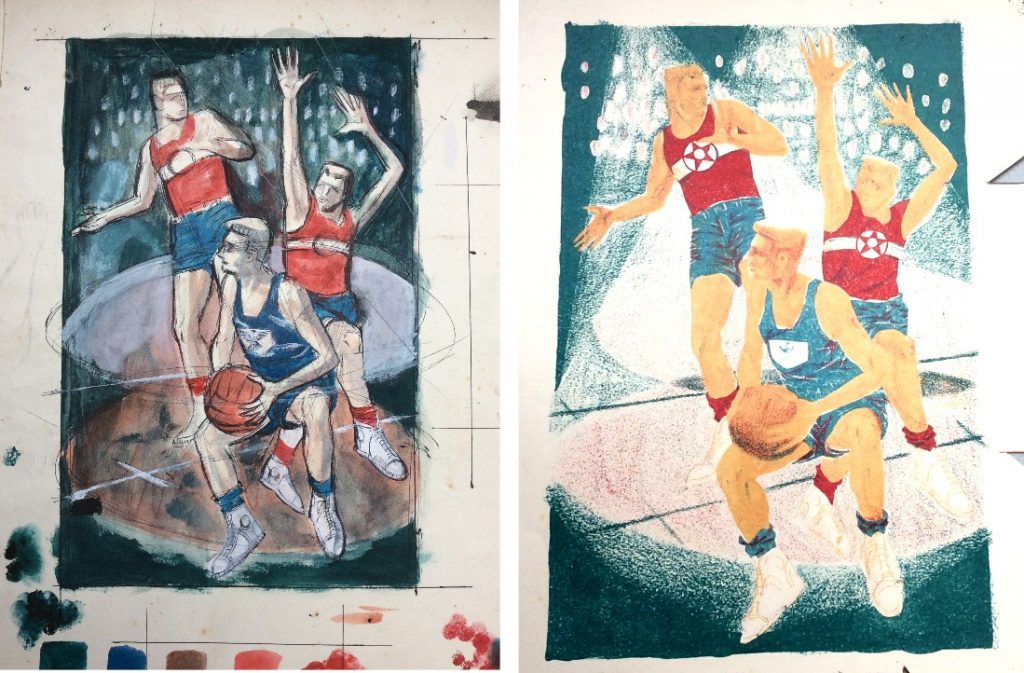
Alan Figg | Basketball Players Lithograph 290 x 180cms
Alan presenting work to Lord Snowdon, then head of the Arts Council, during a visit investigating whether Swansea College of Art was good enough to offer a degree course.
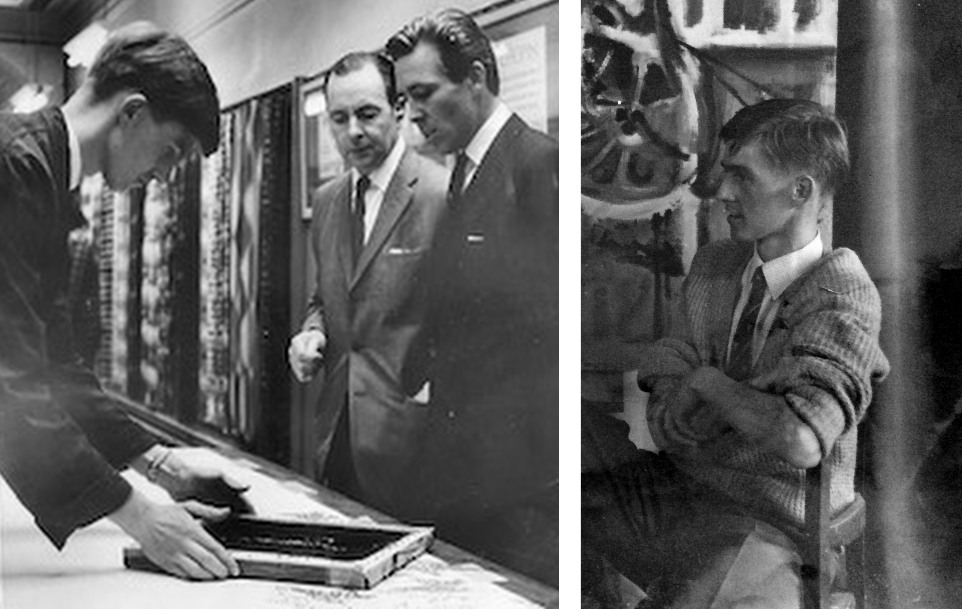
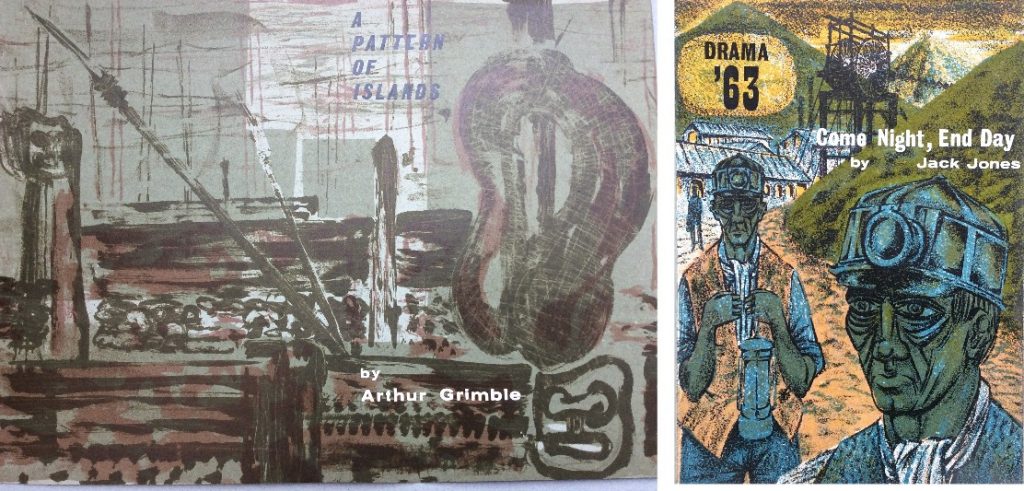
After graduating from Swansea College of Art, Alan embarked upon his teaching career: first in Portchester Bilateral School for Boys, Bournemouth. His Head of Department there, Neil Grant, gave him a set of lino-cutting tools, left behind by the previous incumbent:
‘Here we are, chum. Have a go with these. I don’t want them’.
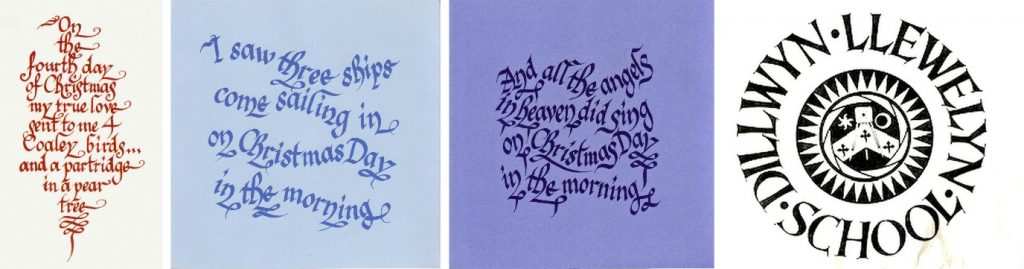
It was the beginning of a life-long engagement with the medium. It was also the beginning of a lifelong obsession with making his own Christmas cards. The year was 1962. You can find the exhibition of the full range here
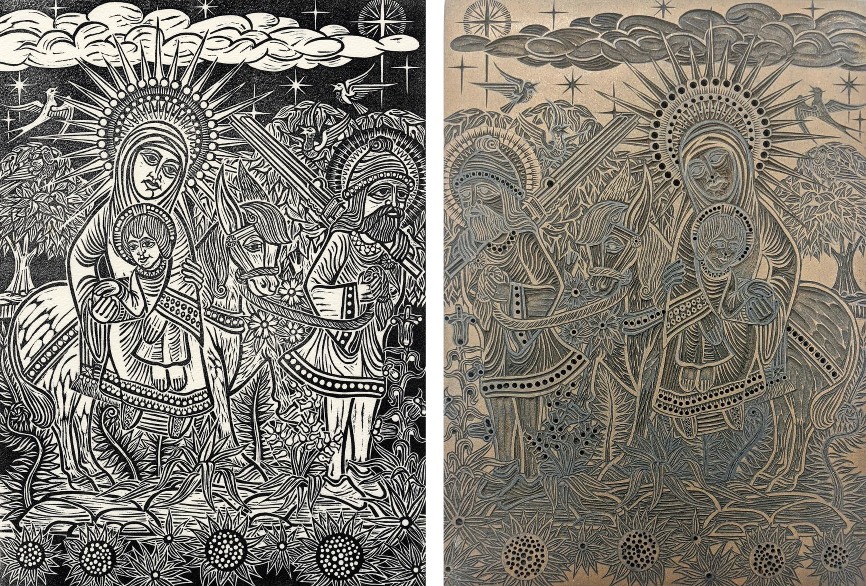
As his skills developed and he had more time to spend on the designs, they became larger and more detailed in scale.
Although he enjoyed his years teaching Bournemouth, Alan, now a young husband and father, hankered after his beloved Gower and found himself back home in Swansea, teaching in Townhill Secondary Boys’ School. Having been a school phobic in his own Secondary School years, he nevertheless loved teaching. He was an enthusiastic teacher and encouraged his pupils to develop skills that he brought from his art college training. His art room was an oasis of creativity and enjoyment and he was much loved by his pupils.
Alan also used his knowledge of Heraldry, gleaned from Marjorie Walters in his college years, to design badges. The badge he designed for his own school, Dillwyn Llewelyn, celebrates the pioneering photographic work accomplished by John Dillwn Llewlyn in the 19th Century. He was also fond of the use of lettering in his images and had a good calligraphic hand.
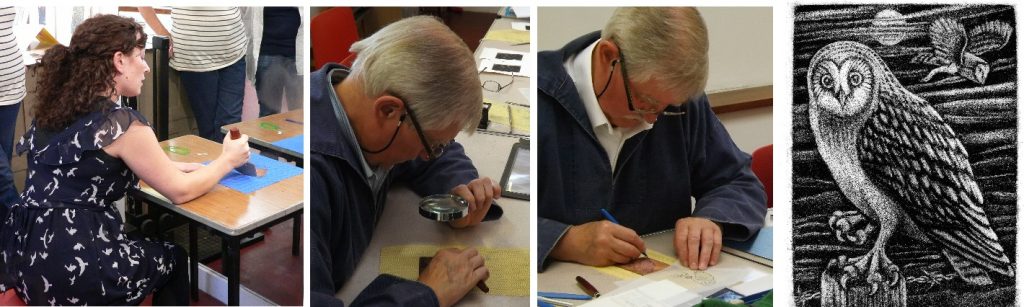
Alan started coming to the workshop in 2012 and soon became one of our volunteers supervising Open Access sessions, supporting members with their printmaking and running workshops and also becoming one of our Directors providing invaluable support for the continued running of the Workshop.
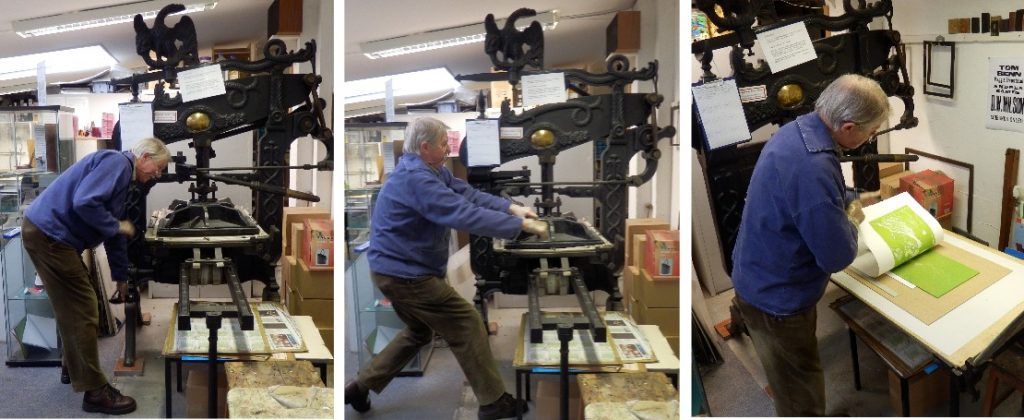
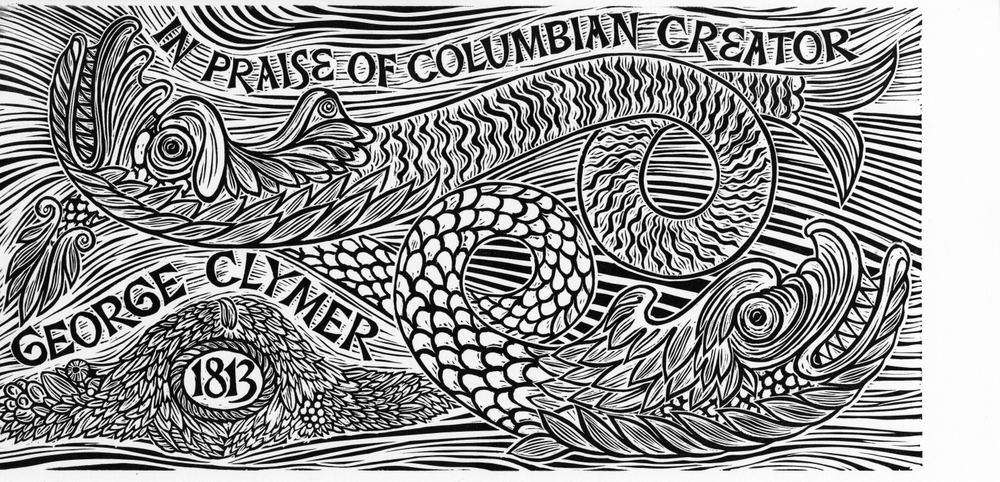
His favourite press is the Columbian, made in George Clymer in London. He knew all the idiosyncracies of its operation and helped many members to achieve a perfect print. He celebrated its fine decorative work in a linocut he made for our Artist Book in 2015.
His own lino cutting technique developed with remarkable accuracy alongside the acquisition of a fine range of cutting tools which he donated to the workshop when he could no longer use them. These complex designs, layering of colour and challenging registration demonstrated his mastery of the technique.
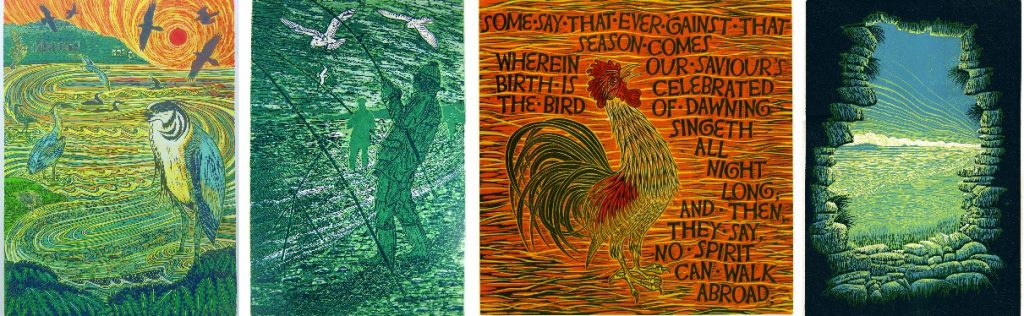
He also took advantage of workshops for new techniques demonstrated by visiting artists. Aoife Leyton introduced us to mezzotint which again needed very fine work and he produced this delightful ‘Night Owl’.
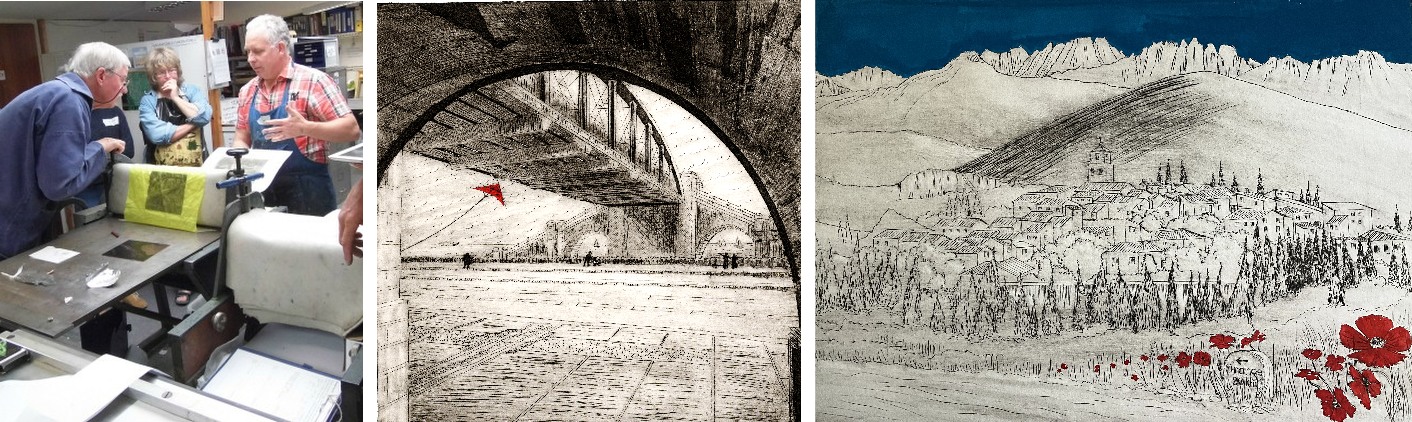
Andrew Baldwin took him into the realms of new techniques in etching:
The Slip Bridge that slipped away…..
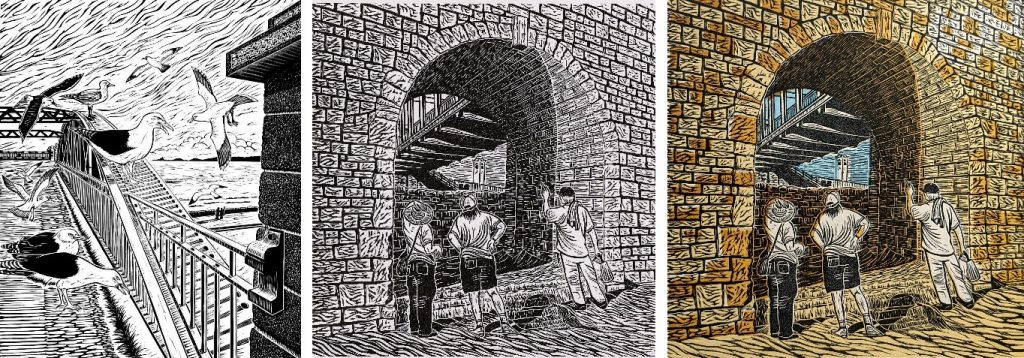
Alan Figg ‘Slip Bridge with Seagulls’ Linocut 380 x 300 mm
The bridge has been removed and placed on the Promenade nearby, causing much disgruntlement amongst many of the population of Swansea, who remember it with fondness when going to the beach.
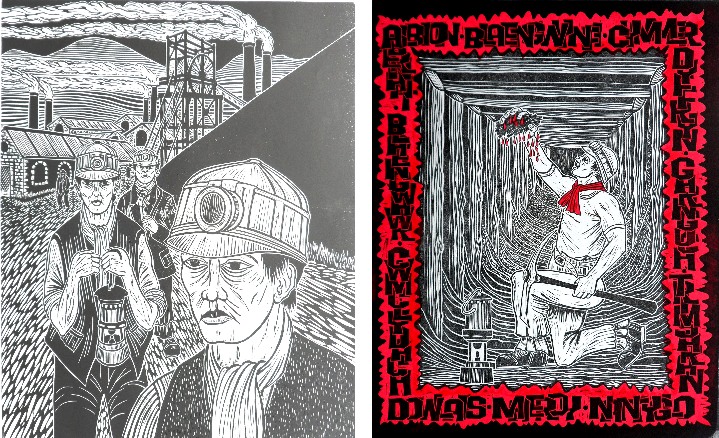
‘Coming off Shift’ | Linocut | The Price of Coal’ Linocut |Framing the print are the names of coal mines: Albion; Blaengwynfi; Cymmer; Abernant; Bleangarw; Cwmclydach; Dowlais; Nantyglo; Dyffryn; Garngoch and Trimsaran.
Eventually, well into his eighties, Alan’s health began to deteriorate. One of the hardest things to bear amongst his many physical challenges, was his failing eyesight. It was significant that his very last piece of work was a portrait of Ludwig Wittgenstein. It was commissioned by Professor Alan Sandry, who had been researching Wittgenstein’s links with Swansea in the forties and was organising an exhibition in the University Library charting the philosopher’s many visits. Sandry wanted a portrait of Wittgenstein to provide a focus in the display. The image was also used as the cover of a book (Sandry, A. (2025) Ed. Wittgenstein in Swansea: Philosophy and Legacy, University of Wales Press) and also to promote associated events. One of the original prints is in the Austrian National Library, Vienna (Osterreichische Nationalbibliothek), the city where Wittgenstein was born.
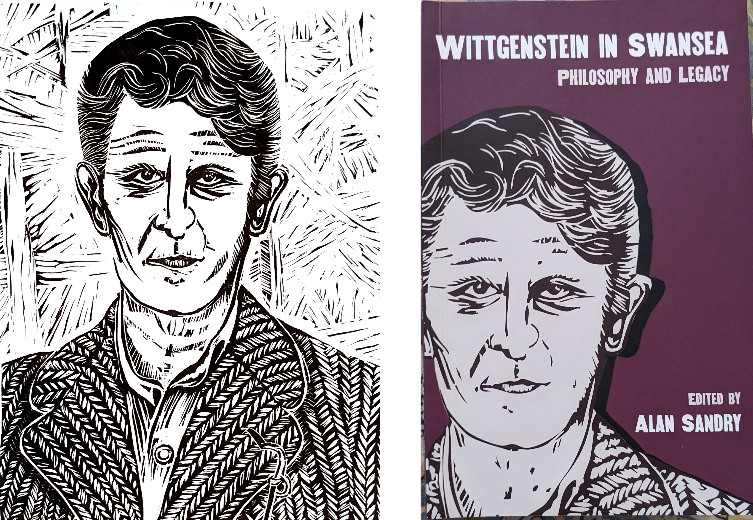
Portrait of Wittgenstein